Boavizta’s 2025 Annual Report
Boavizta’s 2025 Annual Report is finally published! The launch of the e-footprint interface, version 1.0 of the EROOM methodology, our Hackathon at Publicis Sapient, our partnership with the Green IO Conference in London and Paris… A look back at a busy year, driven by our community.
The report, created by our members and Board of Administrators, also sets out our plans for 2026.
Contents
- Statutory purpose
- Values and missions
- Financial report
- Members
- Relations with public and private partners
- External perception of Boavizta
- Governance and activities
- The association’s projects
- 8.1 Boavizta hackathons
- 8.2 Monitoring and presentations
- 8.3 Assessing the impact of Machine Learning
- 8.4 Assessing the impact of applications: e-footprint
- 8.5 Review of the General Carbon Plan
- 8.6 IT Sustainability Tools Repository
- 8.7 BoaviztAPI
- 8.8 Energizta
- 8.9 Boagent
- 8.10 Cloud Scanner
- 8.11 Tool coordination
- 8.12 Top Management Beliefs
- 8.13 Indicator framework
- 8.14 X-Asso: coordination with other associations / ambassadors
- 8.15 EROOM Framework
- Acknowledgements
1. Statutory purpose
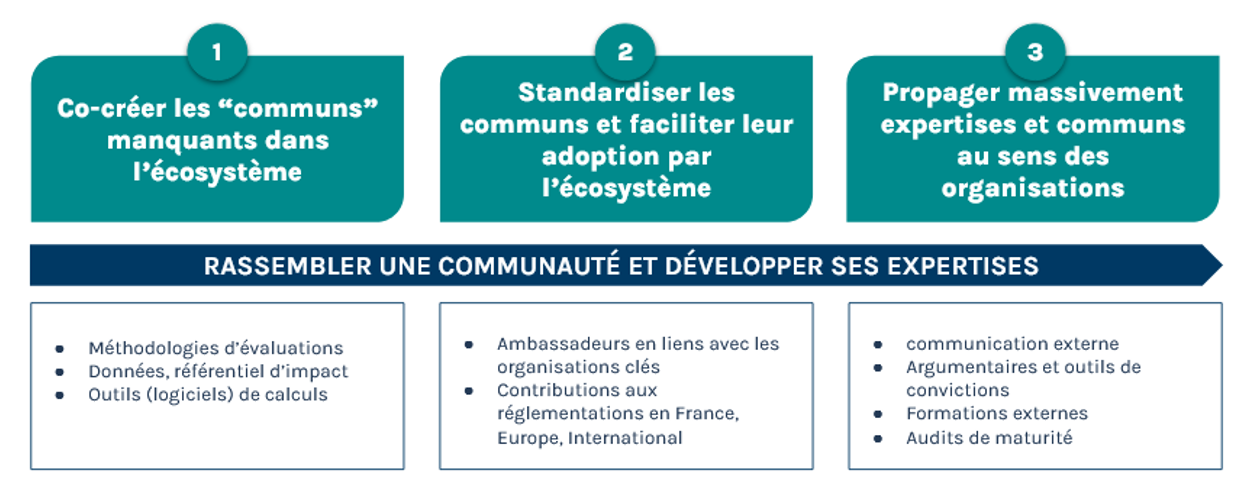
Against a backdrop of major environmental challenges – climate change, depletion of natural resources and biodiversity collapse – our association has set itself the mission of making the assessment and management of the environmental impacts of digital technology within organisations more reliable, simpler and faster.
To achieve this, we act by every possible means, in particular by co-creating and sharing “commons”: expert resources, regularly updated and available under free or open licences. These commons take the form of information and recommendations, assessment methodologies, data repositories, calculation engines, and tools and software, so as to make these approaches accessible to all.

2. Values and missions
2.1 Our purpose
The central cause of our community
We, citizens and digital professionals, are aware of the risks and consequences of overshooting planetary boundaries, as well as the accelerating role of digital technology and its societal impacts. We are committed to reducing the environmental impact of organisations’ digital activities by designing, pooling and sharing digital commons.
2.2 Our objectives
What we want to achieve
To enable public and private organisations to genuinely transform themselves and take responsibility (whether by choice or through regulation), and to align their digital activities with a strategy compatible with planetary boundaries.
To become a interprofessional association whose commons become international benchmarks, helping to accelerate the reduction of the direct and indirect environmental impacts of digital technology and to bend the trajectories of those impacts.
To make the environmental impact of digital transformation tangible through the creation, standardisation and dissemination of commons, using a systemic, auditable, standardised, automated and empowering approach.
2.3 Our values
The heart of our collaborations
A community of doers
Beyond fine words, we make progress together by rolling up our sleeves. We encourage initiative and welcome any effort aimed at improving the assessment, understanding and reduction of the environmental impacts of digital technology. The work undertaken should aim to create resources that are accessible, usable and understandable by as many people as possible.
Open-mindedness coupled with scientific rigour
At Boavizta, debating ideas is common practice; we strive to rely on solid arguments to foster collective intelligence – and even a few eye-openers!
Impact as the central focus
The drive to achieve concrete results and tangible impact underpins all our actions and interactions. We constantly remind ourselves of this imperative, always with kindness, in our exchanges.
Serving the public interest
We act for a cause greater than ourselves while welcoming a diversity of identities and backgrounds. Our outputs are open (open source, open data, Creative Commons) and, although they may indirectly feed commercial initiatives within the terms of their licences, their aim is to democratise and systematise a critical and informed approach to technology.
2.4 Our vision
In five years’ time:
- Boavizta is a leading interprofessional association with an international reach, helping to facilitate and accelerate the assessment of the direct and indirect environmental impacts of digital technology, and to redirect public and private organisations towards technologies that are compatible with planetary boundaries and respectful of living systems.
- Its commons make it possible to assess the relevance of digitalisation objectively, using a systemic, auditable, standardised, automated and empowering approach.
- Its actions help to standardise the commons and to spread and embed them within organisations, but also to genuinely transform organisations and make them accountable (whether by choice or through regulation), and to align digital technology with a low-impact organisational strategy.
- Boavizta helps to bend the environmental trajectories of digital technology worldwide towards greater sustainability.
2.5 Our beliefs
We, the members of Boavizta, believe:
- Of the importance of continuing to develop methodologies, data and tools, with a view to eventually covering the majority of use cases (direct and indirect impacts).
- But also that fulfilling our mission requires standardisation, so as to rally a critical mass of advocates united and focused around a limited set of clearly identified commons.
- It also requires spreading and embedding the commons within organisations, and using them systematically in thinking and decision-making about digital technology.
- However, awareness and knowledge do not necessarily lead to action (see the IPCC reports). Spreading and embedding the commons in organisations, and the actions that must follow, are likely to run into many obstacles, starting with growth plans and outdated business models.
- To overcome these obstacles, we need to create desirable alternative visions in which digital technology has a different place, and to contribute to relevant and binding regulations.
- We can contribute to these changes while preserving our DNA, our uniqueness and what sets us apart. We need a broad and strong community whose collective intelligence will make it possible to identify and implement new solutions in this context.
- Boavizta’s founding values remain relevant and timely: sharing ideas, methodologies, data and tools, scientific rigour, trust and cooperation.
2.6 Our missions
Boavizta helps to:
- Make the assessment of organisations’ digital environmental impact accessible to non-specialists, and help the public and members build their skills
- Produce the key commons missing from the ecosystem (methodologies, data, tools, etc.)
- Standardise them and make them visible
- Spread and embed them within organisations
But also to:
- Define relevant and binding regulations
- Build desirable alternative visions of digital technology and new responsible business models
- Help decision-makers redirect their organisations and align with ambitious trajectories by questioning digital technology in a deep and radical way
3. Financial report
The financial report is available in a separate document: 2025 financial report (PDF, 287 KB, in French)
4. Members
4.1 Individual members
As of x January 2026, Boavizta had 262 members in its Baserow database, including:
- 219 in France
- 110 in Paris or the Paris region
- 93 outside Paris and the Paris region (16 not specified)
- 36 outside France (7 countries not specified)
- 21 whose preferred language is English only
- 71 female, 1 non-binary and 178 male (12 not specified)
By country
| Country | Number | % |
|---|---|---|
| France | 219 | 83.6% |
| United Kingdom | 8 | 3.1% |
| Switzerland | 4 | 1.5% |
| Canada | 3 | 1.1% |
| United States | 3 | 1.1% |
| Italy | 2 | 0.8% |
| Spain | 2 | 0.8% |
| Belgium | 2 | 0.8% |
| Sweden | 2 | 0.8% |
| Tunisia | 1 | 0.4% |
| Finland | 1 | 0.4% |
| Netherlands | 1 | 0.4% |
| Germany | 1 | 0.4% |
| New Zealand | 1 | 0.4% |
| Romania | 1 | 0.4% |
| Chile | 1 | 0.4% |
| Denmark | 1 | 0.4% |
| India | 1 | 0.4% |
| Brazil | 1 | 0.4% |
| Not specified | 7 | 2.7% |
| Total | 262 | 100% |
France: Paris, Paris region, rest of France
| Area | Number | % |
|---|---|---|
| Paris (75) | 53 | 24.2% |
| Île-de-France excluding Paris | 57 | 26.0% |
| Rest of France (incl. overseas) | 93 | 42.5% |
| Not specified | 16 | 7.3% |
| Total | 219 | 100% |
Paris region in total: 110 members (50.2% of members in France).
France: by département
| Département | Number | % |
|---|---|---|
| 75 | 53 | 24.2% |
| 92 | 28 | 12.8% |
| 69 | 9 | 4.1% |
| 44 | 9 | 4.1% |
| 78 | 9 | 4.1% |
| 35 | 8 | 3.7% |
| 38 | 7 | 3.2% |
| 31 | 7 | 3.2% |
| 91 | 7 | 3.2% |
| 34 | 5 | 2.3% |
| 59 | 5 | 2.3% |
| 06 | 5 | 2.3% |
| 93 | 5 | 2.3% |
| 33 | 4 | 1.8% |
| 77 | 3 | 1.4% |
| 94 | 3 | 1.4% |
| 37 | 3 | 1.4% |
| 29 | 2 | 0.9% |
| 74 | 2 | 0.9% |
| 14 | 2 | 0.9% |
| 972 (Martinique) | 2 | 0.9% |
| 45 | 2 | 0.9% |
| 21 | 2 | 0.9% |
| 76 | 2 | 0.9% |
| 73 | 1 | 0.5% |
| 83 | 1 | 0.5% |
| 64 | 1 | 0.5% |
| 04 | 1 | 0.5% |
| 84 | 1 | 0.5% |
| 67 | 1 | 0.5% |
| 26 | 1 | 0.5% |
| 39 | 1 | 0.5% |
| 25 | 1 | 0.5% |
| 01 | 1 | 0.5% |
| 13 | 1 | 0.5% |
| 63 | 1 | 0.5% |
| 28 | 1 | 0.5% |
| 10 | 1 | 0.5% |
| 68 | 1 | 0.5% |
| 95 | 1 | 0.5% |
| 16 | 1 | 0.5% |
| 62 | 1 | 0.5% |
| Not specified | 17 | 7.8% |
| Total | 219 | 100% |
By gender
| Gender | Number | % |
|---|---|---|
| Male | 178 | 67.9% |
| Female | 71 | 27.1% |
| Non-binary | 1 | 0.4% |
| Not specified | 12 | 4.6% |
| Total | 262 | 100% |
By preferred language
| Language | Number | % |
|---|---|---|
| French only | 109 | 41.6% |
| French + English | 114 | 43.5% |
| English only | 21 | 8.0% |
| Not specified | 18 | 6.9% |
| Total | 262 | 100% |
Including 9 members who also mention Spanish.
By membership type
| Membership | Number | % |
|---|---|---|
| Individual | 63 | 72.4% |
| Organisation | 24 | 27.6% |
| Total | 87 | 100% |
4.2 Member organisations
In 2025, 25 organisations were members of Boavizta. Large corporations, IT services companies, start-ups, hosting providers and public institutions: their diversity reflects that of our community and extends the reach of our work. Beyond their financial support, several of them are directly involved in our workgroups, host our hackathons (Publicis Sapient in October 2025) or use our methodologies, as Decathlon does with EROOM.
4.3 Participation
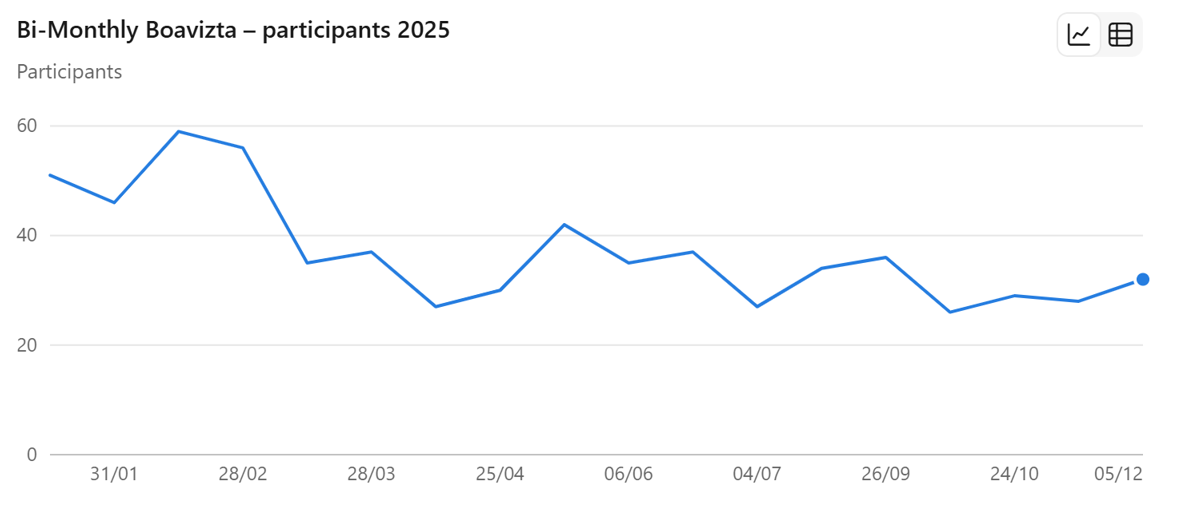
Participation peaked in mid-February 2025, with around 59 participants.
5. Relations with public and private partners
Designers Éthiques’ Eco-design Day
Boavizta supported the event as a communication partner.
Green IO Conference
In 2025, Boavizta stepped up its involvement by becoming a partner of the Green IO Conference, a major event founded by Gaël Duez for committed tech professionals determined to build a more sustainable digital world.
Held in both London and Paris, the conference gave Boavizta an important platform to share our open-source tools, methodologies and studies with an international audience.
This partnership is fully in line with our mission as an association: fostering a responsible digital ecosystem that respects planetary boundaries. It also gave us the opportunity to connect with a wide range of players involved in the ecological transition, strengthening our network and our collective impact.
Ambassadors and inter-association meetings
The French and international Responsible Digital ecosystem is rich in associations doing interesting work. Unfortunately, although some of our members are already involved in other associations, we know each other little and are probably missing opportunities for cross-collaboration.
To address this, one meeting per quarter will be devoted to bringing together four associations (three plus Boavizta), starting on 28 February with AGIT, Point de MIR and The Shift Project.
In addition, a dedicated workgroup has been set up to build strong ties with other associations and make the most of our respective projects.
Presentations at conferences and forums
April 2025
- FlowCon France 2025: talk on AI and Green IT (recording, in French)
June 2025
- GreenTech Forum Brussels: presentation by the Convictions workgroup, “What ROI can we expect from Sustainable IT?”
September 2025
- Green IO London: Boavizta members on the Green IO stand in London to support the event and promote the association
November 2025
- GreenTech Forum Paris:
- Workshop “Model the carbon footprint of your digital services with the open-source tool e-footprint”, with Vincent Villet and Clémence Knaébel
- Talk “Why and how I sold a Responsible Digital policy to my board: what return on investment for companies?”, with Julien Rouzé
December 2025
- Open Source Experience:
- Green IO Paris:
- Workshop “Divide your environmental impact every year with the EROOM framework”, with Morgane Eckert, Raphaël Lemaire and Samia Kherrati
- Launch of the NGO Track: 21 NGOs shared their views on tech sustainability in Europe and potential areas of collaboration, with Nathalie Otte and Benoit Petit
6. External perception of Boavizta
Presence on LinkedIn
Our community kept growing in 2025: Boavizta’s LinkedIn page now has nearly 3,000 followers, up from 2,490 a year earlier. More than 500 people joined us over the year, an increase of around 20%.
We published 29 posts during the year, roughly one every two weeks. Together they received 1,213 reactions, 116 comments and 187 reposts.
The topics we focused on
Events and partnerships made up the largest share of our posts, but it was the Convictions workgroup’s studies that drew the most engagement: nearly 70 reactions per post on average, twice as many as any other topic. The year’s three most popular posts were all about them: the publication of the study (124 reactions), the focus on return on investment (121 reactions and 24 reposts) and the focus on indicators (92 reactions).
| Topic | Posts | Reactions | Comments | Reposts |
|---|---|---|---|---|
| Events and partnerships (GreenTech Forum, Green IO, Point de MIR) | 8 | 239 | 25 | 24 |
| Convictions workgroup studies | 7 | 485 | 38 | 78 |
| Association life and hackathons | 7 | 254 | 32 | 39 |
| Tools and commons (Cloud Scanner, BoaviztAPI, EROOM, GPU LCA) | 6 | 211 | 20 | 39 |
| Regulatory monitoring | 1 | 24 | 1 | 7 |
| Total | 29 | 1,213 | 116 | 187 |
7. Governance and activities
7.1 Board of Directors
Objective
The Board of Directors is a group of people who help the association to structure itself and grow.
Achievements 2025
The Board meets for one hour every month and has a dedicated Mattermost channel for ongoing discussions.
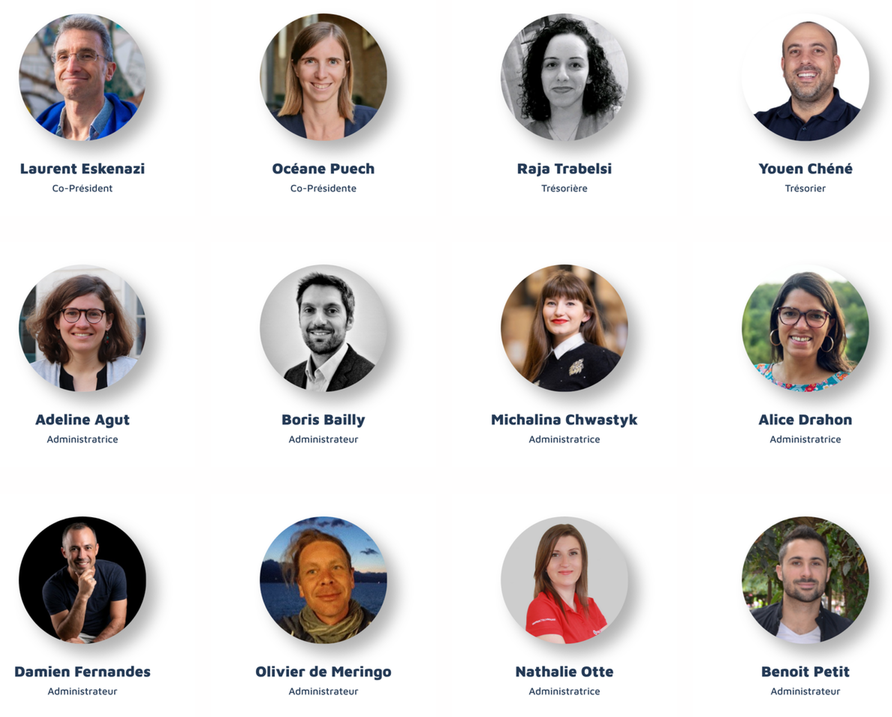
In 2025, the members of the Board of Directors were:
Raja Trabelsi, Youen Chene, Laurent Eskenazi, Arnaud Gueguen, Benoit Petit, Boris Bailly, Michalina Chwastyk, Nathalie Otte, Olivier de Meringo, Oceane Puech, Alice Drahon
Working in groups
Board members met in small groups to work in depth on priority topics. A summary of everything achieved by these groups follows. At each monthly Board meeting, members briefly go through the five working groups to share progress and flag any decisions to be made.
7.1.1 Member engagement and delivery of the commons
Group achievements
A. Understanding and strengthening member engagement
In 2025, our main objective was to better understand how members feel about the association and to encourage their long-term engagement. To do so, we wanted to:
- Identify their reasons for joining the association,
- Understand how they feel and how satisfied they are,
- Gather their suggestions for improvement,
- Assess their participation in working groups.
To answer these questions, we ran a survey between June and October 2025, available in French and English.
B. Making membership renewal easier and improving onboarding tools
A dedicated workgroup focused on:
- Automating the membership renewal campaign, with personalised follow-up and reminders sent to members.
- Updating the registration form:
- Adding more general skills (e.g. Project management) to reflect the diversity of profiles.
- Adding links to the internal rules (French and English versions) and to the manifesto (French/English links corrected).
- Publishing the internal rules on the Boavizta website, with an English translation to make the information more accessible.
- Cleaning up the membership list to identify active memberships (individual members and organisations).
Outlook for 2026
A. Analysing and acting
In 2026, we plan to:
- Analyse the survey results to draw up a concrete action plan,
- Co-design solutions with Board members and association members,
- Present the results and proposals at a bi-weekly meeting.
B. Improving the welcome for new members
We would like to:
- Simplify the membership process to make it smoother and more accessible,
- Clarify how the association is presented, so that its missions are easier to understand,
- Strengthen onboarding, particularly for English-speaking members, so that they can play a full part in the life of the association.
7.1.2 Running the association
Group achievements
GDPR compliance
- Inventory of the association’s tools
- Identification of personal data and related processes
- Appointment of a DPO (Data Protection Officer), mentioned on the website.
Change of registered address
- The association is now registered with Antigone Affaires in Montpellier.
- The new address is: Boavizta - 494, rue Léon Blum, 34000 Montpellier, France.
Migration of internal IT tools
- Public website and datavizta demo moved to hosting paid for by the association.
Outlook for 2026
- Complete the migration of the remaining IT tools
- Tax ruling: apply to the tax authorities for recognition as a public-interest organisation
7.1.3 Promoting the commons and outreach
Group achievements
Work has begun on presenting Boavizta’s commons:
- Interviews were conducted with users,
- Fact sheets describing objectives by type of use were written.
Outlook for 2026
In 2026, the aim is to finalise a booklet showcasing the commons, which will include the fact sheets, and to launch a functional mapping workgroup. This will involve running workshops with users and defining output formats.
7.1.5 Communication
Group achievements
In 2025, the Communication working group met regularly, 15 times in all, to move key topics forward and ensure dynamic, consistent communication across all channels. Its main achievements were:
Internal organisation
- Updated communication materials:
- Refresh of the Boavizta PowerPoint template (French and English versions) for bi-weekly presentations and events, including the updated logo, visual identity and harmonised content.
- Visual design:
- Design of the logo for the e-footprint tool, approved by the Board of Directors and association members after gathering feedback on Mattermost.
- Tools for members:
- Creation of a communication kit on the Wiki to encourage members to share their involvement on social media.
- Streamlined processes:
- Reorganisation of the communication space on the Wiki, with an editorial calendar and better-structured content to make it easier to approve and publish at least one post a week.
- Visual consistency:
- Logos updated on all internal materials and content harmonised (Mattermost, Wiki, etc.).
Social media
- 29 LinkedIn posts published to promote the commons, events and news from the association.
- LinkedIn community grew from 2,500 to 3,000 followers.
- 10 posts published on Boavizta’s Mastodon and Bluesky accounts.
- 30 bi-weekly recordings added to the YouTube and PeerTube channels.
Website
- Content updates:
- Refresh of the Join us and Tools pages, and creation of new pages on frameworks and the members’ area (with relevant links).
- Publication of key documents:
- Publication of the 2024 annual report and its English translation.
- Creation of a page on inter-association collaboration and publication of the Collaboration Charter drawn up by the X-Asso workgroup.
- Visibility of missions:
- More details added on the association’s active missions.
Events
- Partnership with the Green IO Conference:
- Organising members’ presence at the London and Paris editions.
- Preparing internal and external communication (flyers, stickers, roll-up banner).
- Organising preparatory meetings to involve members in the event.
Outlook for 2026
In 2026, the Communication working group aims to step up its work along several strategic lines:
- Social media:
- Share more content to encourage use of the commons and attract new members.
- Keep up a regular publishing rhythm to keep the community engaged and informed.
- Explaining and educating:
- Develop accessible content explaining open source and the commons: what are they? What are they for? How can you contribute?
- Showcase Boavizta tools and resources in a variety of formats.
- Better internal communication:
- Launch a monthly internal email summarising news, key decisions and upcoming deadlines, to strengthen cohesion and transparency within the association.
- Overall communication strategy:
- Draw up a strategy for explaining Boavizta’s commons and tools, aimed at both existing members and external audiences (companies, institutions, the general public).
- Coordinate efforts to showcase all our projects (tools, frameworks, collaborations) in a clear and engaging way.
8. The association’s projects
8.1 Boavizta hackathons
Objective
To bring together industry experts and community contributors for a day of innovation and collaboration, sharing ideas and jointly developing solutions to better measure and reduce the environmental impact of digital technology.
Achievements 2025
One hackathon held on 3 October 2025 at Publicis Sapient France:
- 29 participants, 55% of them online and 25% taking part through a Komeet volunteer assignment,
- Two main projects:
- 🧩 e-footprint
- User testing of the beta version
- Backlog prioritisation for V1 (2025)
- New feature idea → modelling the impact of AI with Ecologits.ai
- ⚙️ EROOM
- Finalisation of V1 of the quick diagnostic
- Creation of a dedicated section on the Boavizta website
- 🧩 e-footprint
Outlook for 2026
- Two or three hackathons during the year,
- Keep the hybrid format so that people can take part remotely,
- One hackathon dedicated to Artificial Intelligence,
- A Boavizta get-together at the end of each hackathon.
8.2 Monitoring and presentations
Objective
To share state-of-the-art knowledge so that everyone can build their skills and get to know the ecosystem better.
Achievements 2025
Presentations given during the bi-weekly meetings:
| Date | Language | Title | Presented by |
|---|---|---|---|
| 17 Jan 2025 | French | Green Software: Tactics, Patterns & Smells | Olivier Le Goaër |
| 31 Jan 2025 | French | Board of Directors election | – |
| 14 Feb 2025 | English | The environmental impacts of IT equipment: a comparative analysis – Resilio Database and Product Carbon Footprint sheets | Louise Aubet, Benjamin Violet, Boris Bailly |
| 28 Feb 2025 | French | Quarterly catch-up with Point de MIR, The Shift Project and AGIT | – |
| 14 Mar 2025 | French | Study on the energy consumption of coding assistants such as GitHub Copilot | Tristan Coignion |
| 28 Mar 2025 | French | ELYS Conseil: presentation of the SCORELCA study on location-based vs market-based electricity mixes | Frédéric Croison |
| 11 Apr 2025 | English | Integrating Screening Life Cycle Assessment in design flow to enable ecodesign with Appa LCA | Maxime Peralta |
| 25 Apr 2025 | French | ALUMET: the missing common for open, universal and verifiable software measurement | – |
| 23 May 2025 | French | Quarterly catch-up with other Responsible Digital associations | – |
| 6 Jun 2025 | English | Building a database of monetary ratios for digital services in the broad sense (consulting, cloud, etc.) by correcting and harmonising carbon disclosures from CDP/ADEME with AI (deep learning), in order to rebuild sector-specific emission factors | Florian Pothin, Juliette Rius and Benjamin Violet |
| 20 Jun 2025 | French | Presentation of GreenApp, a tool for estimating and reducing the carbon footprint of applications | Laurin Boujon |
| 4 Jul 2025 | French | AWS Sustainability Scanner presentation | Sébastien Serre |
| 12 Sep 2025 | French | Presentation of the latest study by the Convictions workgroup: “Responsible Digital: which indicators and resources for a convincing return on investment?” | Julien Rouzé, Nicolas Bauwens |
| 26 Sep 2025 | English | Official release of the e-footprint interface | Vincent Villet |
| 10 Oct 2025 | French | Carbon Topography Representation: Improving Impacts of Data Center Lifecycle | Sébastien Rumley, Olivier Weppe |
| 24 Oct 2025 | French | Collaborative online workshop: identifying and gathering data on data centres, the road to a new digital common? | Benoit Petit |
| 21 Nov 2025 | English | Introduction to the Bundesverband Green Software | Anita Schuettler |
| 5 Dec 2025 | French | AI best practices: lessons learned from analysing 40 frameworks | Anaëlle Monti |
Challenges faced
Running the bi-weekly meetings, few presentation proposals, falling attendance.
Outlook for 2026
A redesign of the bi-weekly began in 2026 to find a format that meets members’ expectations. This work is led by the Board’s “1 - Member engagement” working group.
8.3 Assessing the impact of Machine Learning
BoAmps in a nutshell
BoAmps is a data model for reporting the energy consumption of training and using AI models. BoAmps is also an open-source database for storing these reports.
BoAmps has two main goals:
- To standardise across the industry the way energy consumption is reported.
- To build and maintain a large open database on the energy consumption of AI tasks. This database can be analysed and used to improve the energy efficiency of AI tasks, identify best practices, and more.
Achievements 2025
- Launch of BoAmps, with communication on various occasions
- A ready-to-use guide added to help people share their data
- A form created for entering data manually
- First data collected from various contributors
- Data converters created (CodeCarbon data converter and an example DataFrame converter)
Outlook for 2026
- Collect more data.
- Communicate more to increase the project’s visibility.
- Keep improving the data model and related tools.
- Add visualisations of the collected data.
- Write a scientific report presenting the project.
8.4 Assessing the impact of applications: e-footprint
Objective
To build a tool for creating a digital twin of a digital service, revealing the causal links between how digital services are used (user journeys) and the consumption of hardware and energy resources (manufacturing of devices, servers and storage, and the electrical power consumed by this hardware and the network).
Achievements 2025
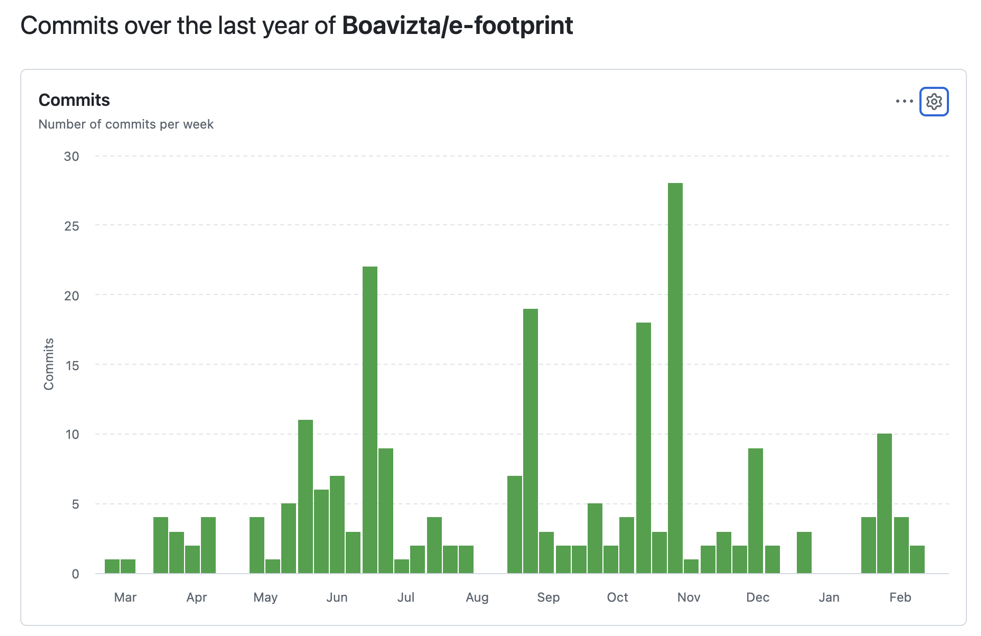
e-footprint:
- Major performance improvements (notably switching the calculation engine from pandas to numpy), making calculations 20 times faster and cutting memory requirements by a factor of 5 to 10. e-footprint is now considered technologically mature: the 80/20 optimisations have been made, and over 90% of computing time is spent in numpy, a highly optimised scientific computing library implemented in C.
- Edge modelling added, where devices are deployed over time with recurring processes running throughout their lifetime. This makes it possible to model fleets of IoT sensors, for example, which can be very useful in an industrial context.
- Connection to the EcoLogits package to model calls to GenAI APIs in e-footprint.
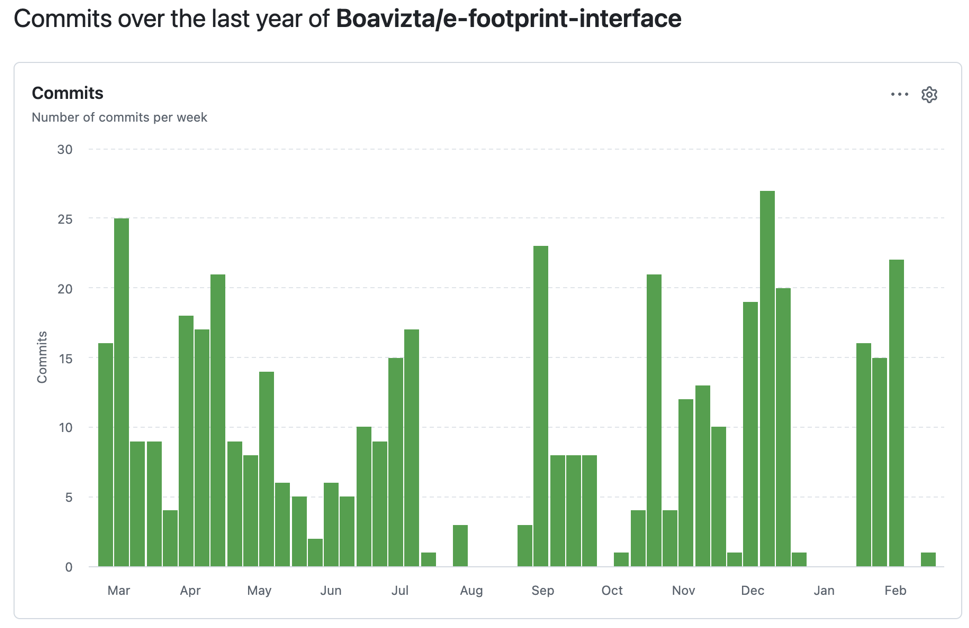
e-footprint interface:
- Complete redesign of the interface to allow complex systems to be built with any number of objects of each type.
- The interface has been deployed on Boavizta’s infrastructure at https://e-footprint.boavizta.org/.
- Contributions from the Boavizta community during the 3 October hackathon.
- Major refactoring at the end of the year to bring the project in line with Clean Architecture principles.
Challenges faced
- Technical difficulties in making the interface scalable: the aim is to let as many people as possible do complex modelling in real time, for less than €100 a month.
- Managing the project’s complexity as it grows, particularly on the interface side. This led to the major Clean Architecture refactoring in December 2025.
Outlook for 2026
e-footprint:
- Keep developing the tool’s modelling and analysis capabilities, in particular better integration with EcoLogits for modelling generative AI, and the ability to break down impacts by usage pattern, user journey and journey step.
- Introduce mixes of devices, networks and countries in usage patterns, to represent complexity without having to multiply usage patterns.
- Introduce weighted lists, notably to represent the probability of user journey steps (for example, multiplying a step by 0.5 because it only happens 50% of the time).
Interface:
- Reach MVP by improving onboarding.
- Simulation feature, allowing users to set a model as their baseline, try variations and analyse the differences in impact.
- Ability to share a model via a public link.
- Better navigation of results, to view the system’s environmental impact at different levels.
8.5 Review of the General Carbon Plan
Objective
The Association Bas Carbone delegated to the Boavizta / APCC collective the task of enriching the “Digital” section of the General Carbon Plan (Plan Carbone Général, PCG).
Achievements 2025
- The workgroup was inactive in 2025
Challenges faced
- Workstream leads and some experts were unavailable
Outlook for 2026
- We relaunched the workgroup in 2026 to complete the parts left unfinished in 2024
- Publication of a new version in the PCG by the ABC team in summer 2026
8.6 IT Sustainability Tools Repository
Objective
To provide an open, collaborative tool that lists tools and applications for assessing the environmental impacts of digital systems.
To allow tools to be reviewed or filtered using objective criteria, and to list as many tools from the ecosystem as possible.
Achievements 2025
- Review and update of the listed tools (partial)
- Test of a v3 built on new Datami components (to improve usability). Conclusion: using Datami did not work out.
- Rapprochement with the German association Bundesverband Green Software to join its Landscape project (Bundesverband Green Software). BGS agreed in principle, and enthusiastically.
Challenges faced
- Lack of time for developing the app, Datami bugs and maintenance complexity.
- Lack of time for reviewing the listed tools
Outlook for 2026
- Finalise with BGS the update of their model to include some of our criteria
- Transfer our data to the Landscape.
- Secure Boavizta’s ongoing participation in the Landscape project (current contributors no longer have time).
- Communicate about the partnership (visibility and user guide)
8.7 BoaviztAPI
Objective
- To develop an API giving access to Boavizta’s work on the multi-criteria assessment of digital components, equipment, services and infrastructure across their entire life cycle.
Achievements 2024
- Significant increase in the number of contributors (@davidkopp, @Shillaker, @JX5671, @valentinchaud, @cosmastech, @tibosmn)
- See the BoaviztAPI release notes on GitHub
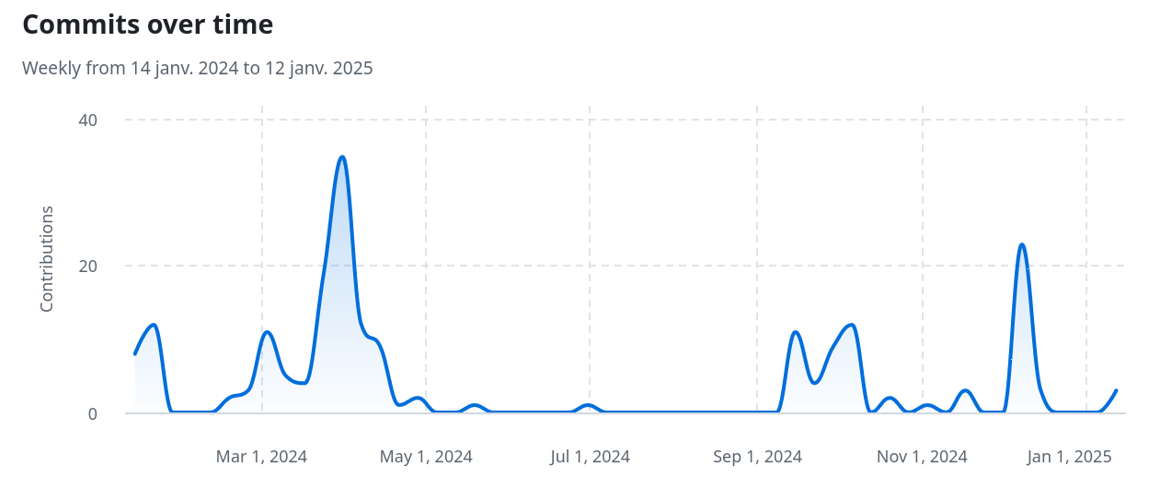
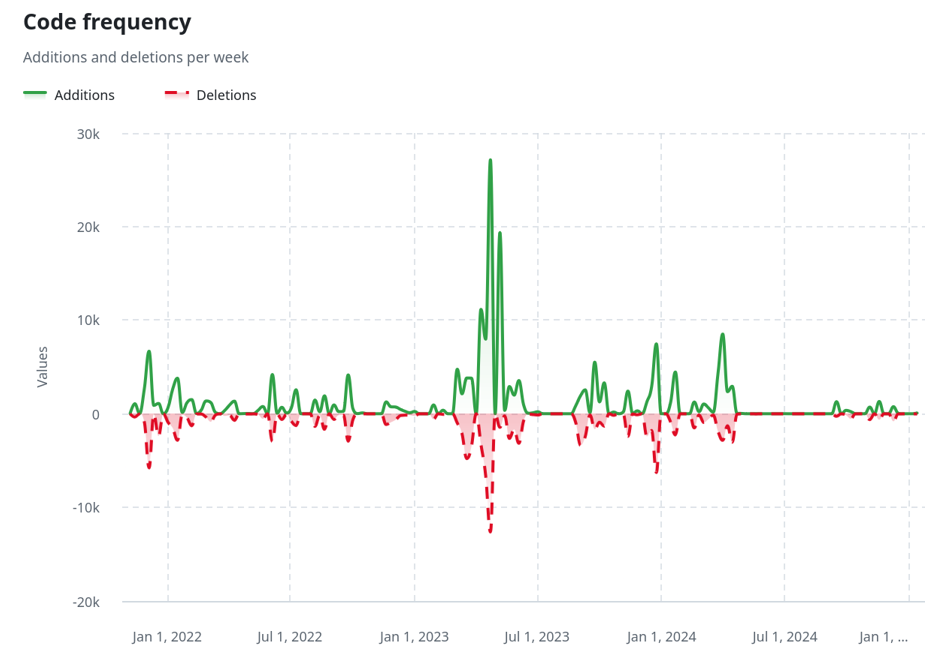
- 315 commits (398 in 2023)
- 26 forks and 76 stars to date
Over the year:
From 2022 to the end of 2024:
Traffic:
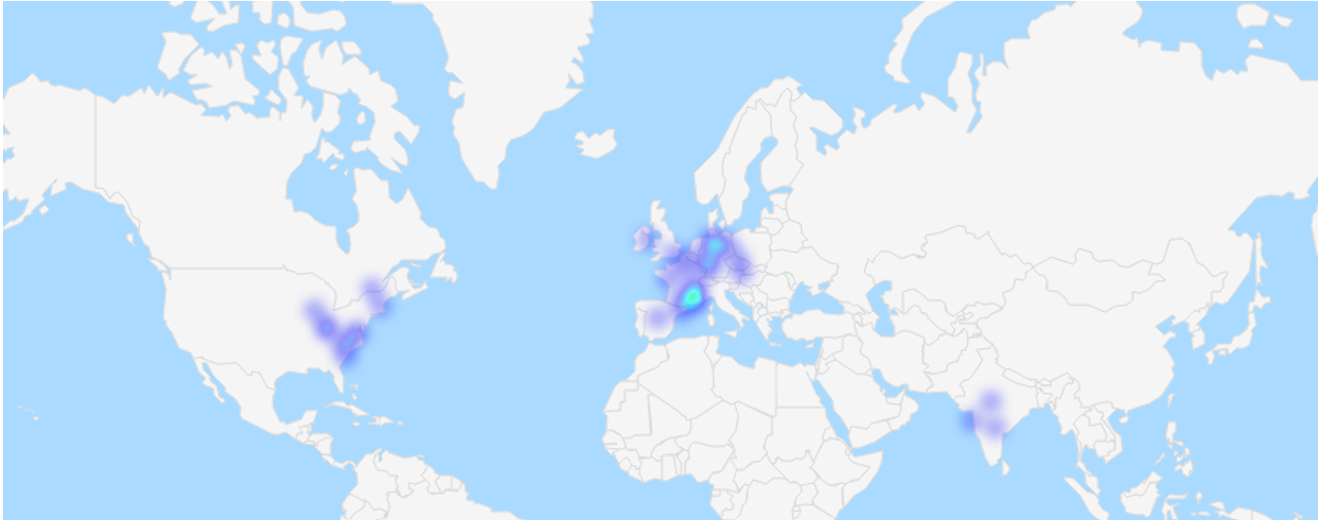
- Requests do not come from Europe alone: also from the US and India
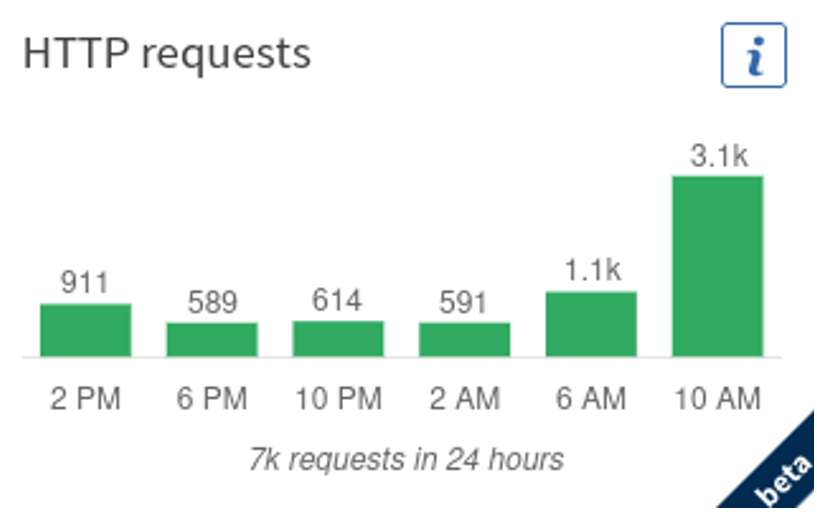
- 7k requests in the last 24 hours
- Further analysis needed before drawing conclusions for the whole year
Challenges faced
- No co-maintainer
Outlook for 2025
- Find a maintainer to step in, or even take the lead, so that David can focus on his PhD
8.8 Energizta
Objective
- A collaborative project to collect and report open data on the energy consumption of servers.
Achievements 2024
- Codebase taken back in hand during the November hackathon
Challenges faced
- Limited bandwidth among contributors
Outlook for 2025
- Refactor the codebase and set up a data collection infrastructure in the association’s name
8.9 Boagent
Objective
- To assess the impacts of a physical server (or a virtual machine in the future) and its applications, in the form of monitoring metrics (local agent)
Achievements 2024
- Codebase taken over by Benjamin Dromard @ Hubblo (not yet a member)
- Regular maintenance and updates once again
- 243 commits in 2024, 8 in 2023
Over the year:

From 2022 to the end of 2024:

Outlook for 2025
- Extend the tool’s ability to allocate shares of the footprint across the whole life cycle, to different components and to software processes
8.10 Cloud Scanner
Objective
To make it easier to assess the environmental impacts of using on-demand cloud services, mainly on public cloud infrastructure (AWS, Azure, etc.), by automating this assessment.
- Fill the gap left by the lack of reporting and transparency from the main vendors.
- Enable real-time monitoring (dashboard, history) as well as simulating the impacts of an architecture before it is deployed.
- Pave the way for a GreenOps approach by making it easier to feed environmental metrics into other decision-making tools.
Achievements 2025
- Several releases of the application, with work on documentation, ease of use and security.
- Improved usability and dashboard presentation.
- Inventory export and simulation capabilities added.
- Support for all AWS regions and instances.
- Ability to filter by tags, and individual metrics added for each resource.
- Julien Nioche joined as co-maintainer
- Communication around each release.
Challenges faced
- Lack of transparency from cloud providers, which makes impacts hard to model.
- Lack of data on managed services and on the GPUs used for AI.
Outlook for 2026
Assessment from the cloud provider and supplier side:
- Make ADEME’s Cloud PCR (product category rules) better known and easier to use
- Extend pilot deployments.
- Compare assessments from BoaviztAPI, the Cloud PCR and IaaS/SaaS assessment using monetary ratios (by Eric)
- Extend coverage to more services and cloud providers.
8.11 Tool coordination
Objective
- To coordinate the development of the various tools delivered by the association
Achievements 2025
- Tool coordination now happens on the dedicated channel when a specific tool needs it, but it is no longer a workgroup driving projects.
Outlook for 2026
- Keep the tools connected via the Boavizta chat
- Include English-speaking contributors
8.12 Top Management Beliefs
Objective
To gather the arguments in favour of a Responsible Digital approach within a company. We also aim to back our arguments with figures to make them more compelling (particularly on environmental, social and financial ROI).
Achievements 2025
- Publication and promotion of the second report, “Responsible Digital: indicators, resources and ROI” (in French)
- Interview guide drawn up
- 15 interviews conducted with mature organisations
- Analysis of the interviews to draw lessons on investments, ROI, indicators tracked, etc.
Challenges faced
- Difficulty obtaining auditable ROI figures
- Limited number of interviews due to the working group’s lack of bandwidth
Outlook for 2026
Publication of a new version of the report with more data on the ROI of a Responsible Digital approach.
8.13 Indicator framework
Objective
To provide a framework of environmental indicators aimed particularly at IT departments, incorporating in particular those required by French and European regulations as well as various voluntary frameworks.
The aim is to enable users unfamiliar with regulatory and voluntary reporting frameworks to understand which indicators to prioritise in their organisation or department in order to measure the return on investment of a Responsible Digital approach.
Achievements 2024
- Publication on the Boavizta website of a database listing the main steering indicators for a Responsible Digital approach (in French).
- Structuring of a database of digital-related impacts, risks and opportunities (IROs) most frequently considered when carrying out a double materiality assessment.
Challenges faced
- Reporting and indicators are a bottomless pit, given the sheer number of reporting frameworks and indicators, with many overlaps in scope and sometimes differing assumptions. Making the whole thing readable and actionable, especially for a novice audience, is a real challenge.
- Varying availability and differing interests among contributors make it rather difficult to focus on any one deliverable.
Outlook for 2026
- The challenges identified regarding indicators (see above) led us to focus on specific use cases in order to deliver actionable tools that meet identified needs (convincing digital professionals, advocacy, etc.).
- We will focus on providing data and tools so that digital technology is considered a material topic. The first planned deliverable will enable IT departments to take part in the CSRD by identifying the impacts, risks and opportunities relevant to digital technology.
8.14 X-Asso: coordination with other associations / ambassadors
Objective
To streamline information sharing and collaboration with associations in the Responsible Digital ecosystem.
Achievements 2024
- Meetings with several associations on two occasions: NEC in Chambéry in September and GreenTech Forum 2024
- First joint initiatives: mapping our strengths and challenges, counter-proposal to the GreenTech Forum
- Discussions with representatives of the Green Software Foundation and the Green Web Foundation at Green IO Paris
Outlook for 2025
- Regular meetings with associations during the bi-weekly
- Stronger ties with other associations, contributing to advocacy, offering our commons for other associations’ use (awareness-raising, lobbying)
- Setting up meetings with the GSF and GWF to establish cooperation on joint workgroups
8.15 EROOM Framework
Objective
- To build on the EROOM storytelling (on software optimisation to save hardware and reduce the digital footprint), which has been in high demand, and turn it into an actionable tool that can spread across IT services companies and large users.
Achievements 2025
- We set up the core team, which first released the EROOM “quick diagnostic”, then version 1.0 of the full methodology along with the accompanying section of the website.
- We ran a workshop as part of the hackathon
- We gave several talks and published several pieces, including a chapter in the book Pour une nouvelle écologie de l’industrie (in French), written in 2025 and finally published in 2026.
Outlook for 2026
- Take part in Boavizta hackathons
- Continue presenting EROOM at conferences (including the talk where Decathlon explains how they rolled out EROOM (YouTube video))
- Structure the workgroup to make it easier to welcome new contributors
- We are considering exploring two new workgroups:
- How can we make the EROOM methodology easier to adopt, for example by improving usability with a web application rather than a spreadsheet?
- How could AI – which is upending the developer’s profession and dominating every conversation – be harnessed to accelerate EROOM? How can EROOM fit into AI-augmented development? With an EROOM agent, EROOM skills?
9. Acknowledgements
A huge thank you to every Boavizta member for their energy, time and commitment throughout the year. None of what this report describes would have been possible without you.
Thank you also to the associations of the Responsible Digital ecosystem for their encouragement and our collaborations, and to our member organisations and supporters, whose trust allows us to keep our commons alive.
See you in 2026 to keep building, together, a digital world that stays within planetary boundaries!